
Navigating today’s complex risk environment can be a monumental task. Mike Radak, Alliant Specialty Claims & Legal, spearheads Executive Liability Insights, a monthly review of news, legal developments and information on executive liability, cyber risk, employment practices liability, class action trends and more.
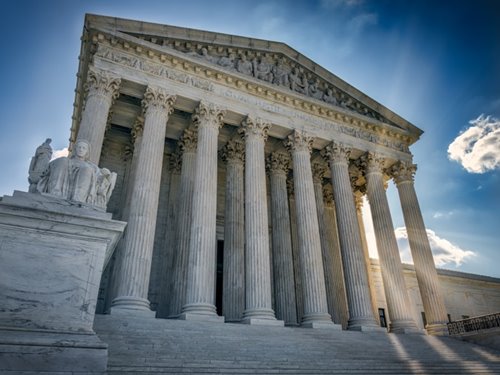
FEATURED ARTICLE
SUPREME COURT REJECTED A "VIRTUAL PANOPTICON" INTO PRIVATE LIFE
The Supreme Court extended the Fourth Amendment’s protections to location data that telecommunication providers and third-party entities collect. Previously, in a landmark decision, the Supreme Court held that access to cell-site location data required a search warrant based on probable cause, recognizing that individuals have a right to privacy interest in such data.
In This Issue:
COURT HOLDS MULTIPLE FIDUCIARY DUTY ACTIONS CONSTITUTED SEPARATE CLAIMS
Hitchman Fiduciaries, LLC v Dominion Ins. Servs., 250404260 (Utah 8th Jud. Dist. Ct. July 7, 2026).
A Utah court, applying California law, held that multiple underlying fiduciary duty actions constituted separate claims under a professional liability policy rather than a single related claim. In doing so, the court concluded that the Carrier had improperly treated distinct allegations involving separate duties, parties, and injuries as one related claim.
Read More >>
DELAWARE COURT ENFORCES D&O POLICY BUMP-UP EXCLUSION FOR MERGER SETTLEMENT
MSG Networks Inc. v. Fed. Ins. Co., 2026 Del. Super. LEXIS 282 (June 24, 2026).
A Delaware court held that a D&O insurer had no obligation to fund a shareholder merger settlement because the payment constituted an increase in merger consideration barred by the policy's bump-up exclusion.
Read More >>
LENDING SERVICES SUBLIMIT CONTROLS DESPITE BROADER D&O LIMITS
Unibank v. Great Am. Sec. Ins. Co., 2026 U.S. Dist. LEXIS 139179 (W.D. Wash. June 23, 2026).
A court determined that a D&O policy’s Lending Services sublimit controlled over the policy's broader D&O limits because the claims ultimately arose out of, or involved, lending activities. A bank sought coverage from its D&O carrier for two related proceedings arising from its issuance of Small Business Administration loans to finance purchases of carbon capture and utilization units, which were allegedly part of a Ponzi scheme.
Read More >>
EXTENDED REPORTING PERIOD DOES NOT PRESERVE COVERAGE FOR UNTIMELY REPORTED CLAIM
Bridges v. Maxum Indem. Co., 25-1911, (6th Cir. Jun. 29, 2026).
A federal appellate court, applying Michigan law, held that a malpractice carrier properly denied coverage after the Insured, a law firm, failed to satisfy the reporting requirements contained in its claims-made professional liability policy. The ruling emphasized that the reporting provisions in a claims-made policy will be enforced according to their plain language.
Read More >>
WAR EXCLUSION PRECLUDES COVERAGE FOR PIPELINE BLAST
Nord Stream AG v Lloyd's Insurance Co. S.A. & Anor [2026] EWHC 1685 (Comm) (Eng.).
An English court reinforced the potential reach of “war exclusions” within commercial policies and held that a war does not need to be the proximate cause of damage for the exclusion to be triggered. Instead, the exclusion is read broadly and only requires a war to be the significant cause of an insured’s property damage in order to be applied.
Read More >>
CYBER CORNER
Click to read the following cases:
- CALIFORNIA FEDERAL COURT DISMISSES CIPA LITIGATION BROUGHT BY VIVEK SHAH WITHOUT PREJUDICE
- CALIFORNIA LAWMAKERS ADVANCE MEASURE TO LIMIT CERTAIN WEBSITE TRACKING LAWSUITS
- SECURITY MEASURES LEADING TO DATA BREACH RESULT IN AN EIGHT-FIGURE SETTLEMENT
- TRUMP ADMINISTRATION ACCELERATES TRANSITION TO POST-QUANTUM CRYPTOGRAPHY
Read More >>
EMPLOYMENT CORNER
Click to read the following cases:
- ABSENT ADEQUATE NOTICE, INSURERS CANNOT QUIETLY BROADEN EXCLUSIONS IN RENEWAL POLICIES
- CIRCUIT SPLIT DEEPENS OVER FLSA REMEDIES FOR GAP TIME CLAIMS
Read More >>
SECURITIES CORNER
Click to read the following cases:
- DELAWARE COURT APPLIES LARGER SETTLEMENT RULE TO D&O SETTLEMENT ALLOCATION
- SECURITIES CLASS ACTIONS REBOUNDED IN THE FIRST HALF OF 2026
- JUNE 2026 NOTEWORTHY SETTLEMENTS AND JUDGEMENTS
Read More >>
SHAREHOLDER CORNER
Click to read the following cases:
- JUNE 2026 SECURITIES CLASS ACTION FILINGS
Read More >>
SUPREME COURT REJECTED A "VIRTUAL PANOPTICON" INTO PRIVATE LIFE
Chatrie v. United States, 609 U.S. ___ (2026).
The Supreme Court extended the Fourth Amendment’s protections to location data that telecommunication providers and third-party entities collect.
Previously, in a landmark decision, the Supreme Court held that access to cell-site location data required a search warrant based on probable cause, recognizing that individuals have a right to privacy interest in such data. In the present decision, the Court expanded that reasoning to geofence warrants that require a technology company to provide geographic data of a user’s location during a specific period of time to understand who was present at a crime scene.
The ruling stemmed from a robbery of a credit union, during which law enforcement attempted to identify all devices that were present at the crime scene. Law enforcement obtained a geofence warrant directing a global search engine to disclose anonymous location data for devices within a defined geographic location during a two-hour period. The warrant aimed to narrow the scope of users identified through a three-step process. The issue before the Court was whether obtaining location data from identified devices within the geofence constituted a search.
In the majority opinion, the Court expressed concern that providing the government with access to a cell-phone user’s movements in public and private places could create a “virtual panopticon” providing an “intimate window into a person’s life.” Therefore, access to such data constituted a search and required a “reasonable” warrant or, in other words, a warrant supported by a probable cause and sufficiently narrowed in scope. Notably, the Court did not invalidate all geofence warrants as too generalized to bypass the protections of the Fourth Amendment. Instead, it only ruled that such location data was protected (as opposed to being deemed as volunteered to third parties) and that accessing it required a particularized warrant. The decision leaves open how narrowly future geofence warrants must be tailored to satisfy the particularity requirements of the Fourth Amendment.
COURT HOLDS MULTIPLE FIDUCIARY DUTY ACTIONS CONSTITUTED SEPARATE CLAIMS
Hitchman Fiduciaries, LLC v Dominion Ins. Servs., 250404260 (Utah 8th Jud. Dist. Ct. July 7, 2026).

A Utah court, applying California law, held that multiple underlying fiduciary duty actions constituted separate claims under a professional liability policy rather than a single related claim. In doing so, the court concluded that the Carrier had improperly treated distinct allegations involving separate duties, parties, and injuries as one related claim.
The underlying dispute arose after successor trustees were appointed to administer a family trust, after which multiple lawsuits were filed alleging breaches of fiduciary duty, improper management of trust assets, conversion of funds, and interference with contractual and business relationships. The Carrier initially accepted the defense but later concluded that all of the allegations arose from the same or related professional services and, therefore, constituted a single claim subject to a limited portion of the policy.
After concluding that coverage had been exhausted, the Carrier ceased advancing defense costs, arguing that the underlying actions constituted a single related claim. The court disagreed, holding that the policy's "same, continuing or related professional services" provision operated as a limitation on coverage and, therefore, had to be construed narrowly. Although the allegations arose from the Insureds' service as trustees, the court found they involved distinct professional services, separate fiduciary duties, different parties acting in different legal capacities, unique wrongful acts, and independent injuries arising from separate transactions.
Accordingly, the claims were not logically or causally connected merely because they involved the same Insureds or arose from the same fiduciary relationship, and the Carrier could not aggregate them into a single claim to limit coverage. The decision reinforced that related claims provisions cannot be interpreted so broadly that they effectively eliminate coverage for separate wrongful acts sharing only a common professional relationship or factual background.
DELAWARE COURT ENFORCES D&O POLICY BUMP-UP EXCLUSION FOR MERGER SETTLEMENT
MSG Networks Inc. v. Fed. Ins. Co., 2026 Del. Super. LEXIS 282 (June 24, 2026).

A Delaware court held that a D&O insurer had no obligation to fund a shareholder merger settlement because the payment constituted an increase in merger consideration barred by the policy's bump-up exclusion.
The coverage dispute stemmed from a reverse triangular merger of two entities, both owned by the same controlling shareholder family. After the merger, minority shareholders alleged that the transaction process was unfair and that they received inadequate consideration for their shares. The insureds sought coverage for the settlement and the carriers denied arguing that the D&O policy’s bump-up exclusion applied. The exclusion stated that "Loss" did not include any amount that "represents, or is substantially equivalent to, an increase in the consideration paid" in an acquisition of more than fifty percent of an entity's ownership interests or voting rights.
The insured argued that the settlement reflected a business decision to avoid the risks and costs of litigation rather than compensation for an allegedly inadequate merger price. The insured also contended that the merger did not qualify as an "acquisition" because the same controlling shareholder remained in control.
The court disagreed and emphasized that the proper inquiry focuses on what the settlement actually represented rather than the parties' stated motivations for settling. The court looked at the underlying litigation and determined that the shareholder action sought recovery based on allegations that the merger consideration was inadequate and the settlement closely aligned with the plaintiffs' damages analysis. The court also noted that the matter settled after extensive discovery and on the eve of trial, making it less likely that the payment merely reflected avoided litigation expenses. Taken together, the court concluded that the settlement represented, or was at least substantially equivalent to, an increase in merger consideration within the meaning of the bump-up exclusion.
The court also concluded that the transaction constituted an acquisition under the policy. Although the insured argued that there had been no meaningful change in corporate control, the court found that the policy language did not require a change of control. Instead, the exclusion applied whenever a transaction resulted in the acquisition of more than 50% of the target company's securities or voting rights. The exclusion applied regardless of whether ultimate control remained with the same controlling shareholder.
LENDING SERVICES SUBLIMIT CONTROLS DESPITE BROADER D&O LIMITS
Unibank v. Great Am. Sec. Ins. Co., 2026 U.S. Dist. LEXIS 139179 (W.D. Wash. June 23, 2026).

A court determined that a D&O policy’s Lending Services sublimit controlled over the policy's broader D&O limits because the claims ultimately arose out of, or involved, lending activities.
A bank sought coverage from its D&O carrier for two related proceedings arising from its issuance of Small Business Administration loans to finance purchases of carbon capture and utilization units, which were allegedly part of a Ponzi scheme. The carrier acknowledged that the matters fell within the policy’s coverage but maintained that they were subject to a specialized "Lending Services" coverage limitation rather than the broader D&O limits otherwise available.
The policy's Lending Services Endorsement provided:
The Insurer's maximum Limit of Liability under this Policy with respect to all Claims arising out of or in any way involving Lending Services shall not exceed the Limit of Liability provided under the Lender Liability Insuring Agreement, Broad Form Lender Liability Insuring Agreement or Broad Form Company Insuring Agreement, whichever is so attached to this Policy, regardless as to whether a shared or separate limit is specified in Item 8. of the Declarations for any Insuring Agreement provided to the Insured under this Policy.
the period of time after the end of the Policy Period for reporting Claims that are first made against the Insured during the applicable Extended Reporting Period by reason of an act or omission that occurred prior to the end of the Policy Period and is otherwise covered by this Policy (emphasis added).
The bank argued the Endorsement's sub-limit was available in addition to the limit for claims implicating both coverages, such that the total limits available for the claim should be the combined Main and Broad Form limits. According to the bank, the allegations against the directors and officers went beyond lending activities, triggering the broader D&O limits in addition to the Lending Services coverage.
The court sided with the carrier, determining that the Policy explicitly capped coverage for all Claims "arising out of or in any way involving Lending Services," regardless of any separate or shared limits identified elsewhere in the policy. The Policy broadly defined "Lending Services" to include services "involving or relating to" an extension of credit or loan servicing. Because the underlying proceedings centered on loans the bank made to finance the purchases, the court concluded they plainly involved Lending Services.
EXTENDED REPORTING PERIOD DOES NOT PRESERVE COVERAGE FOR UNTIMELY REPORTED CLAIM
Bridges v. Maxum Indem. Co., 25-1911, (6th Cir. Jun. 29, 2026).

A federal appellate court, applying Michigan law, held that a malpractice carrier properly denied coverage after the Insured, a law firm, failed to satisfy the reporting requirements contained in its claims-made professional liability policy. The ruling emphasized that the reporting provisions in a claims-made policy will be enforced according to their plain language.
The underlying matter arose after the Insured allegedly committed legal malpractice while representing a client in a medical malpractice action. Following a settlement of that matter and assignment of the Insured’s right, the client sought coverage under the Insured’s professional liability program. The dispute centered on whether the Insured’s notice of potential claim during a purchased two-year extended reporting period was sufficient to preserve coverage for a later-filed malpractice claim.
The Carrier’s policy provided coverage for claims first made and reported during the policy period or an applicable extended reporting period. The policy also contained a “notice of potential claim” provision, which permitted a subsequently asserted claim to relate back to the policy only if the Insured became aware of the potential claim and provided written notice to the Carrier during the policy period. The Insured did not report the actual malpractice claim until well after both the policy period and the extended reporting period had expired. Instead, the Insured argued that its earlier notice of a potential claim during the extended reporting period satisfied the policy’s notice requirements and preserved coverage.
The court rejected that argument, concluding that the policy expressly distinguished between the policy period and the extended reporting period. The court highlighted that the “notice of potential claim” provision unambiguously required potential claims to be reported during the policy period and that reporting such a claim during the extended reporting period did not preserve coverage for a later actual claim. Because the Insured first noticed the potential claim after the policy period had expired, it failed to satisfy the policy's express notice condition precedent.
WAR EXCLUSION PRECLUDES COVERAGE FOR PIPELINE BLAST
Nord Stream AG v Lloyd's Insurance Co. S.A. & Anor [2026] EWHC 1685 (Comm) (Eng.).

An English court reinforced the potential reach of “war exclusions” within commercial policies and held that a war does not need to be the proximate cause of damage for the exclusion to be triggered. Instead, the exclusion is read broadly and only requires a war to be the significant cause of an insured’s property damage in order to be applied. The court also held that insurers are not required to prove the identities of the perpetrators of the alleged damage.
This decision stems from the destruction of two natural gas pipelines located within an ongoing war zone. The insured, who owned and operated the pipelines, alleged that deliberate explosives were placed near the pipelines and caused them to become inoperable. The explosives were believed to be a form of sabotage against one of the countries in the conflict and were an attempt to halt their ability to pump gas into other regions. The actual perpetrator, however, has not been identified but it was suspected that at least three possible state actors could have carried out the attack.
Following the significant cause framework, the court held that all of the suspected state actors had a causal link to the ongoing war and that was enough to trigger the exclusion. Per the exclusion’s language, any damage caused both directly and indirectly by a war was precluded from coverage.
Cyber Corner
CALIFORNIA FEDERAL COURT DISMISSES CIPA LITIGATION BROUGHT BY VIVEK SHAH WITHOUT PREJUDICE
Vivek Shah v. Talentbridge, Inc., 2026 U.S. Dist. LEXIS 118373 (2026).
A California court ruled that a website user (the “user”) failed to sufficiently allege an injury in fact for Article III standing. The user brought this lawsuit under the California Invasion of Privacy Act (“CIPA”) alleging that a staffing company (the “Company”) embedded third-party tracking and analytics code in its website, which transmitted the user’s search queries to third-party companies without notice or consent.
CALIFORNIA LAWMAKERS ADVANCE MEASURE TO LIMIT CERTAIN WEBSITE TRACKING LAWSUITS
California lawmakers moved a step closer to limiting one category of website tracking lawsuits. The Assembly Committee on Privacy and Consumer Protection approved an amended version of Senate Bill 690. The amendment would eliminate the private right of action under the section of the California Invasion of Privacy Act (CIPA) that addressed pen register and “trap-and-trace” technologies. Enforcement would shift solely to the California Attorney General.
SECURITY MEASURES LEADING TO DATA BREACH RESULT IN AN EIGHT-FIGURE SETTLEMENT
A California based genetic testing company (the “Company”) that suffered a data breach which resulted in a compromise that led to its bankruptcy and a takeover by a holding company settled claims from dozens of attorneys general concerning its failure to safeguard user data.
TRUMP ADMINISTRATION ACCELERATES TRANSITION TO POST-QUANTUM CRYPTOGRAPHY
In June 2026, President Trump signed an Executive Order directing the federal government to accelerate its transition to post-quantum cryptography. The order sets firm deadlines for agencies and directs changes that will affect many federal contractors as well. It focuses on moving away from current encryption methods that could eventually be broken by large-scale quantum computers.
Employment Corner
ABSENT ADEQUATE NOTICE, INSURERS CANNOT QUIETLY BROADEN EXCLUSIONS IN RENEWAL POLICIES
Star K.E., LLC v. RSUI Indemnity Co., 2026 U.S. Dist. LEXIS 144423 (W.D. Pa. June 30, 2026).
A federal court held that while an employment insurer properly relied on a sexual misconduct exclusion to deny coverage there were genuine issues of material fact regarding whether the insurer materially broadened the exclusion during the policy renewal process without providing adequate notice to the insured.
CIRCUIT SPLIT DEEPENS OVER FLSA REMEDIES FOR GAP TIME CLAIMS
Sec’y of U.S. Dep’t of Labor v Comprehensive Healthcare Mgmt. Servs. LLC, 24-2842 (3d Cir. 2026).
A circuit court held that the Fair Labor Standards Act (“FLSA”) does not provide a remedy for overtime “gap time” claims. Gap time claims seek compensation for unpaid straight-time hours worked in excess of an employee’s scheduled hours but that do not independently qualify for overtime compensation.
Securities Corner
DELAWARE COURT APPLIES LARGER SETTLEMENT RULE TO D&O SETTLEMENT ALLOCATION
Hemisphere Media Grp., Inc. v. Fair Am. Select Ins. Co., 2026 Del. Super. LEXIS 317 (June 18, 2026).
The Delaware Superior Court held that the Larger Settlement Rule governs allocation of a D&O settlement where both covered and uncovered claims or parties are involved, unless the insurance policy expressly mandates a different allocation methodology. Under that rule, a settlement is presumed to be covered to the extent it resolves covered claims.
SECURITIES CLASS ACTIONS REBOUNDED IN THE FIRST HALF OF 2026
The first half of 2026 marked a notable increase in federal securities class action activity, suggesting that securities litigation has returned to a more active pace after a slow 2025. If filings continue at their current rate, annual case volume is expected to exceed recent highs, with traditional federal securities fraud claims continuing to account for the majority of new actions.
|
Director/Officer |
Role |
Company |
|
John S. Myers |
Founder |
Sterling Capital, LLC |
|
Charles J. Cole |
Officer |
Beacon Heart, LLC |
| Justin Jennings | Founder | Vortex Strategies LLC |
|
Director/Officer |
Role |
Company |
|
John S. Myers |
Founder |
Sterling Capital, LLC |
|
Charles J. Cole |
Officer |
Beacon Heart, LLC |
|
Justin Jennings |
Founder |
Vortex Strategies LLC |
JUNE 2026 NOTEWORTHY SETTLEMENTS AND JUDGMENTS
|
Amount |
Director/Officer |
Role |
Company |
|
$709,352 |
William Lee "Perch" |
President |
Phoenix American Hospitality, LLC |
|
$3,583,328.27 |
Margaret Sanders & Francisco Herrera |
Directors |
Sanders Family Office, LLC |
|
$304,827.18 |
Michael Bowen |
Former COO |
Cannon Operating Company LLC |
| $5,518,902 | Jiajie Liu | Founder | Radiant Horizons Limited |
|
Amount |
Director/Officer |
Role |
Company |
|
$709,352 |
William Lee "Perch" |
President |
Phoenix American Hospitality LLC |
|
$3,583,328.27 |
Margaret Sanders & Francisco Herrera |
Directors |
Sanders Family Office, LLC |
|
$304,827.18 |
Michael Bowen |
Former COO |
Cannon Operating Company LLC |
|
$5,518,902 |
Jiajie Liu |
Founder |
Radiant Horizons Limited |
Source: U.S. Securities and Exchange Commission
https://www.sec.gov/litigation/admin.htm
ABOUT ALLIANT INSURANCE SERVICES
Alliant Insurance Services is the nation’s leading specialty broker. In the face of increasing complexity, our approach is simple: hire the best people and invest extensively in the industries and clients we serve. We operate through national platforms to all specialties. We draw upon our resources from across the country, regardless of where the resource is located.
Contributors

Robert Aratingi
robert.aratingi@alliant.com
Isabel Arustamyan, Esq.
isabel.arustamyan@alliant.com
Jaimi Berliner, Esq.
jaimi.berliner@alliant.com
Abbe Darr, Esq.
abbe.darr@alliant.com
David Finz, Esq.
david.finz@alliant.com
Peter Kelly, Esq.
peter.kelly@alliant.com
Steve Levine, Esq.
slevine@alliant.com
Chuck Madden, Esq.
chuck.madden@alliant.com
Karina Montoya, Esq.
karina.montoya@alliant.com
Malia Shappell, Esq.
malia.shappell@alliant.com
Sujal Vaidya, Esq.
sujal.vaidya@alliant.com
Jacqueline Vinar, Esq.
jacqueline.vinar@alliant.com